Few recovery practices have caught on the way the cold plunge has. Two or three minutes in cold water is uncomfortable, invigorating, and strangely addictive — and it's become a fixture of morning routines from gyms in Brickell, Miami to executive wellness plans. Here's what a cold plunge actually does, what the evidence supports, and how to try one without the guesswork.
What a Cold Plunge Is
A cold plunge — also called cold water immersion — is exactly what it sounds like: immersing your body in cold water for a short period, usually a few minutes. The water is cold enough to be a genuine shock at first, which is the whole point. That initial jolt sets off a cascade of responses that leave many people feeling alert, clear, and oddly great once they step out.
An Old Practice, Newly Popular
Cold immersion isn't a modern biohack — it's ancient. Greek and Roman physicians prescribed cold baths, and the Roman bathhouse always ended in the frigidarium, a cold plunge pool. In the Nordic countries, winter swimming through a hole in the ice — often straight out of a hot sauna — has been a tradition for centuries. What's new is the technology: instead of a frozen lake, you get a clean, temperature-controlled tub.
How Cold Water Immersion Works
When you enter cold water, your body reacts fast. Blood vessels near the surface constrict, shunting blood toward your core. Your nervous system releases a surge of norepinephrine — a messenger linked to alertness, focus, and mood — which is a big part of why people describe a post-plunge "high." The cold also numbs soreness and, by reducing blood flow to the limbs temporarily, is thought to blunt the inflammation that follows hard exercise.
What the Research Shows
Reasonably supported: post-exercise recovery
A 2015 meta-analysis in PLOS ONE found cold water immersion improves several markers of acute recovery after exercise, including muscle soreness. Our plunge is held at a constant 48°F, and a short immersion of just two to three minutes is enough to get the effect — with cold, longer isn't better.
Emerging: mood and alertness
The norepinephrine response is well documented, and early studies on cold exposure and mood are promising — but this is still an emerging area, not settled science.
Worth knowing: the muscle-building caveat
Here's a finding many cold-plunge fans don't hear: a well-known 2015 study in The Journal of Physiology found that regular cold water immersion right after strength training can blunt some of the muscle-building adaptations you're training for. The takeaway isn't "don't plunge" — it's timing. If your main goal that day is building muscle, it's smart to separate your cold plunge from your lifting by a few hours rather than jumping straight in afterward.
What to Expect at Healthspan
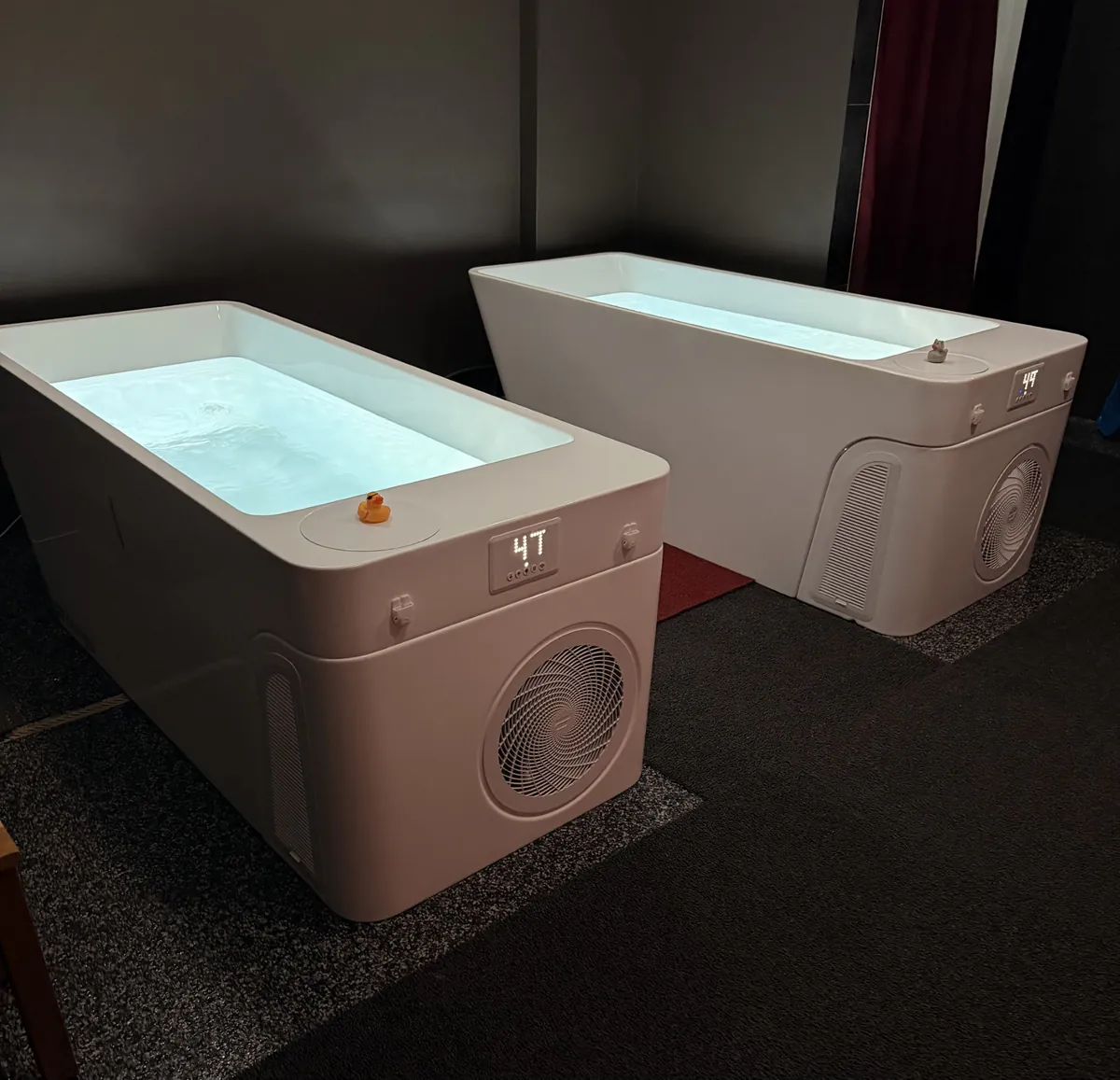
Our cold plunges are commercial tubs from Plunge, held at a constant 48°F and maintained without chlorine using ozone, hydrogen peroxide, Alkalinity Up, and Sirona Sanitizer — clean, clear water, no ice buckets required. A typical session is short — about two to three minutes — and many members plunge three to five times per week.
The most important part is your breathing. When you first hit the water, the instinct is to gasp and hyperventilate — instead, we coach you to keep your breath slow, controlled, and even. For safety, we don't permit aggressive or performance breathing techniques in or around the plunge. Ease in, breathe steady, and let the initial shock pass; it usually settles within the first 30 seconds.
Cold Plunge in a Stack
The cold plunge is a natural finisher because it leaves you alert. Paired with the traditional sauna, it becomes contrast therapy — heat then cold — which has its own article and its own following in our Nordic Area. A common Healthspan sequence is PEMF, then traditional sauna, then cold plunge. If you're chasing an energized start to the day, ending a stack on the plunge is the move.
Who Should Be Cautious
The cold plunge briefly raises your heart rate and blood pressure, so it isn't for everyone. If you have a heart condition, uncontrolled high blood pressure, Raynaud's, are pregnant, or have any condition affected by cold, check with your healthcare provider first. Never plunge under the influence of alcohol, and never treat it as a breath-hold challenge. Used sensibly, it's one of the most refreshing few minutes of the day.
Frequently Asked Questions
How long should I stay in a cold plunge?
How cold is the water at Healthspan?
Should I cold plunge after my workout?
What's the right way to breathe?
How often can I do it?
Take the Plunge in Brickell, Miami
If you've been curious about cold plunging, there's no better way to start than with a coached first session in a clean, controlled setting. Healthspan is at 1441 Brickell Avenue, Suite 310, Miami — come find out why members keep coming back to the cold.